Premium” and “VIP Packages” convey quality and full-service experience.

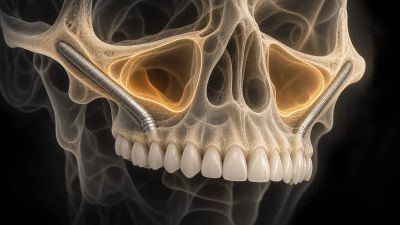
Zygomatic implants are a specialist option for selected patients who need upper-jaw tooth replacement but have insufficient maxillary bone for conventional dental implants. These longer implants are anchored in the zygomatic bone, commonly known as the cheekbone, to help support an upper-jaw prosthesis.
Because this is a complex treatment, suitability must be determined through a clinical examination, three-dimensional imaging, and coordinated surgical and restorative planning.
Severe upper-jaw bone loss may develop after years without teeth, previous implant or bone-graft failure, trauma, infection, or surgery involving the maxilla.
For selected patients, zygomatic implants may provide an alternative to extensive staged bone grafting. However, they are not automatically the best option for everyone with bone loss. Conventional implants, bone grafting, sinus augmentation, or other rehabilitation plans may be more appropriate depending on the patient’s anatomy, health, and treatment goals.
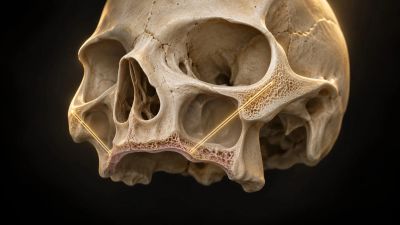
Zygomatic implants may be considered for selected patients with severe upper-jaw bone deficiency who cannot receive conventional implants without extensive additional procedures.
Possible candidates may include patients who:
- Have severe bone loss in the upper jaw
- Have experienced previous implant or bone-graft failure
- Have a maxillary defect following trauma or surgery
- Require full upper-jaw rehabilitation
- Are medically suitable for complex implant surgery
- Can maintain appropriate oral hygiene and long-term follow-up
Previous implant or graft failure alone does not automatically make someone eligible. Final suitability can only be confirmed after specialist examination and imaging.
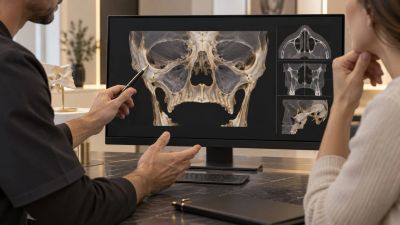
Planning normally includes a detailed dental examination and three-dimensional CT or CBCT imaging covering the upper jaw and midface.
These assessments allow the clinical team to evaluate:
- The remaining upper-jaw bone
- The zygomatic or cheekbone anatomy
- The maxillary sinuses
- The proposed implant paths
- Existing teeth and oral tissues
- The planned final prosthesis
- Previous implants, grafts, or dental treatments
Any existing sinus condition should be assessed before treatment. The implant surgeon and restorative dentist must coordinate the surgical and prosthetic plan before implant placement.
There are different zygomatic implant configurations and surgical approaches. The appropriate technique depends on the patient’s anatomy and the amount and location of the remaining upper-jaw bone.
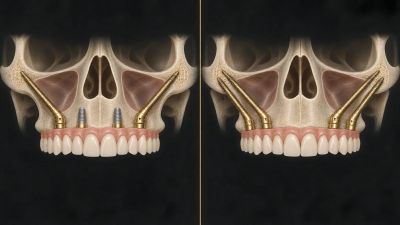
Some treatment plans combine one zygomatic implant on each side with conventional implants placed in the front of the upper jaw.
When the available upper-jaw bone cannot support conventional implants, a Quad Zygoma approach may be considered. This normally involves two zygomatic implants on each side.
The implant path may pass through or outside the sinus depending on the individual anatomy. The surgical team selects the technique only after reviewing the three-dimensional scans and planned restoration.
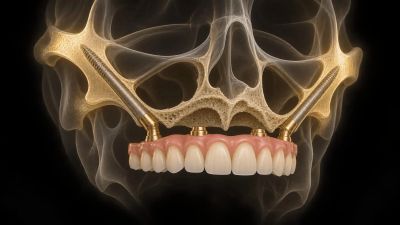
After the surgical and prosthetic plan has been confirmed, the implants are positioned according to the planned anatomical path and connected to support an upper-jaw restoration.
Depending on the case, the final treatment may involve a fixed or removable prosthesis. The number and position of implants are selected according to the available anatomy and planned teeth.
A temporary fixed restoration may sometimes be attached soon after surgery. However, this depends on implant stability, bone and soft-tissue conditions, implant distribution, and the treating surgeon’s clinical judgement. Some patients require a delayed restoration while healing takes place.
There is no single operating time that applies to every zygomatic implant case.
The duration depends on:
- The number of implants required
- The patient’s anatomy
- Whether extractions are needed
- Whether additional procedures are required
- The type of temporary or final restoration planned
- The complexity of previous dental treatments
The treating team will provide an individual treatment schedule after reviewing the scans and completing the surgical and prosthetic plan.
For an appropriately selected patient, zygomatic implants may:
- Support upper-jaw rehabilitation despite severe bone deficiency
- Reduce the need for extensive staged bone grafting
- Provide an option after certain failed implant or graft treatments
- Support a fixed upper-jaw restoration
- Allow earlier temporary teeth in selected cases with adequate implant stability
- Reduce the total number of surgical stages in some treatment plans
These are potential treatment advantages and not guaranteed outcomes. Immediate or same-day teeth cannot be promised before clinical assessment.
Zygomatic implant placement is a technically demanding surgical procedure and must be planned carefully by an experienced clinical team.
Possible risks and complications may include:
- Sinusitis or persistent sinus symptoms
- Infection or inflammation around the implant
- Communication between the mouth and sinus
- Implant failure or loss of stability
- Soft-tissue complications
- Prosthetic screw or component problems
- Need for additional treatment or revision
- Rare injury to nearby anatomical structures
The individual risk level depends on the patient’s anatomy, sinus health, medical history, oral condition, previous treatments, and proposed surgical technique. These risks should be discussed with the treating surgeon before consent.
Zygomatic implants are not the only treatment option for severe upper-jaw bone loss.
Alternative treatments may include:
- Conventional implants when sufficient bone is available
- Short or angled implants in selected areas
- Bone grafting followed by conventional implants
- Sinus augmentation
- Removable implant-supported prostheses
- Conventional removable dentures
- A combination of surgical and restorative techniques
Each option involves different procedures, healing periods, maintenance requirements, risks, and costs. The specialist should explain why a particular approach is being recommended after reviewing the scans and planned final restoration.
Recovery varies according to the complexity of the surgery and whether additional procedures were performed.
Patients receive individualized instructions regarding:
- Prescribed medication
- Oral cleaning and hygiene
- Diet and food consistency
- Physical activity
- Swelling management
- Sinus precautions
- Follow-up appointments
- Temporary and final prosthesis care
Contact the treating team promptly if you experience worsening pain or swelling, fever, unusual discharge, persistent nasal or sinus symptoms, uncontrolled bleeding, difficulty breathing, or a loose restoration.
Long-term professional maintenance, daily oral hygiene, and scheduled implant and prosthesis checks remain essential after healing.
Please reach us at Info@beautypointtr.com if you cannot find an answer to your question.
A temporary restoration may be possible when implant stability and the clinical conditions allow it. This cannot be promised before assessment.
Zygomatic implants may reduce the need for extensive grafting, but some patients still need additional procedures.
Not for everyone. The specialist compares both options after reviewing your anatomy, scans, and planned restoration.
No implant can be guaranteed to last. Healing, general health, prosthesis design, hygiene, and regular maintenance all matter.
No. A specialist must evaluate the upper jaw, cheekbone, sinuses, medical history, oral health, and planned restoration before deciding whether this treatment is suitable.
Beauty Point TR coordinates consultations and treatment planning for international patients considering dental treatment in Turkey.
Dental diagnosis, implant surgery, and clinical aftercare are provided by treating clinicians at licensed partner healthcare facilities.
Share your dental history and any available panoramic X-rays or three-dimensional scans with our coordination team. Following specialist assessment, the clinical team will advise whether zygomatic implants, conventional implants, bone grafting, or another treatment option may be appropriate.
Beauty Point TR
Zafer, Babaocağı Sk., Bahçelievler/İstanbul, Türkiye