Premium” and “VIP Packages” convey quality and full-service experience.

Beauty.point.tr
  • Home
  • About Us
  • Privacy Policy
  • Our Results
  • Services
  • Terms & Conditions
  • Recovery- Aftercare
  • Plastic Surgery Recovery
  • Dental Care and Recovry
  • Dental - Implants
  • Zygomatic Implants
  • Implant Aftercare
  • Full-Arch Implant
  • Dental Crowns and Veneers
  • More
    • Home
    • About Us
    • Privacy Policy
    • Our Results
    • Services
    • Terms & Conditions
    • Recovery- Aftercare
    • Plastic Surgery Recovery
    • Dental Care and Recovry
    • Dental - Implants
    • Zygomatic Implants
    • Implant Aftercare
    • Full-Arch Implant
    • Dental Crowns and Veneers
Beauty.point.tr
Get your Free Consultation
  • Home
  • About Us
  • Privacy Policy
  • Our Results
  • Services
  • Terms & Conditions
  • Recovery- Aftercare
  • Plastic Surgery Recovery
  • Dental Care and Recovry
  • Dental - Implants
  • Zygomatic Implants
  • Implant Aftercare
  • Full-Arch Implant
  • Dental Crowns and Veneers
Get your Free Consultation

All-on-4, All-on-5 & All-on-6 Dental Implants

Full-arch treatment replaces the teeth of one jaw with a fixed bridge supported by dental implants. A plan may use four, five or six implants, depending on the available bone, your oral health and the design of the replacement teeth. More implants do not automatically mean a better result. The treating dental team assesses each jaw individually and explains the suitable options, risks and alternatives before treatment.


Is a Full-Arch Plan Right for You?

Before recommending full-arch treatment, the dental team assesses whether any remaining teeth can be preserved. They review your medical history, gum health, available bone, dental imaging, bite and the space needed for a bridge. The upper and lower jaws have different anatomical considerations. Active gum disease or other oral problems should be assessed as part of the treatment plan.
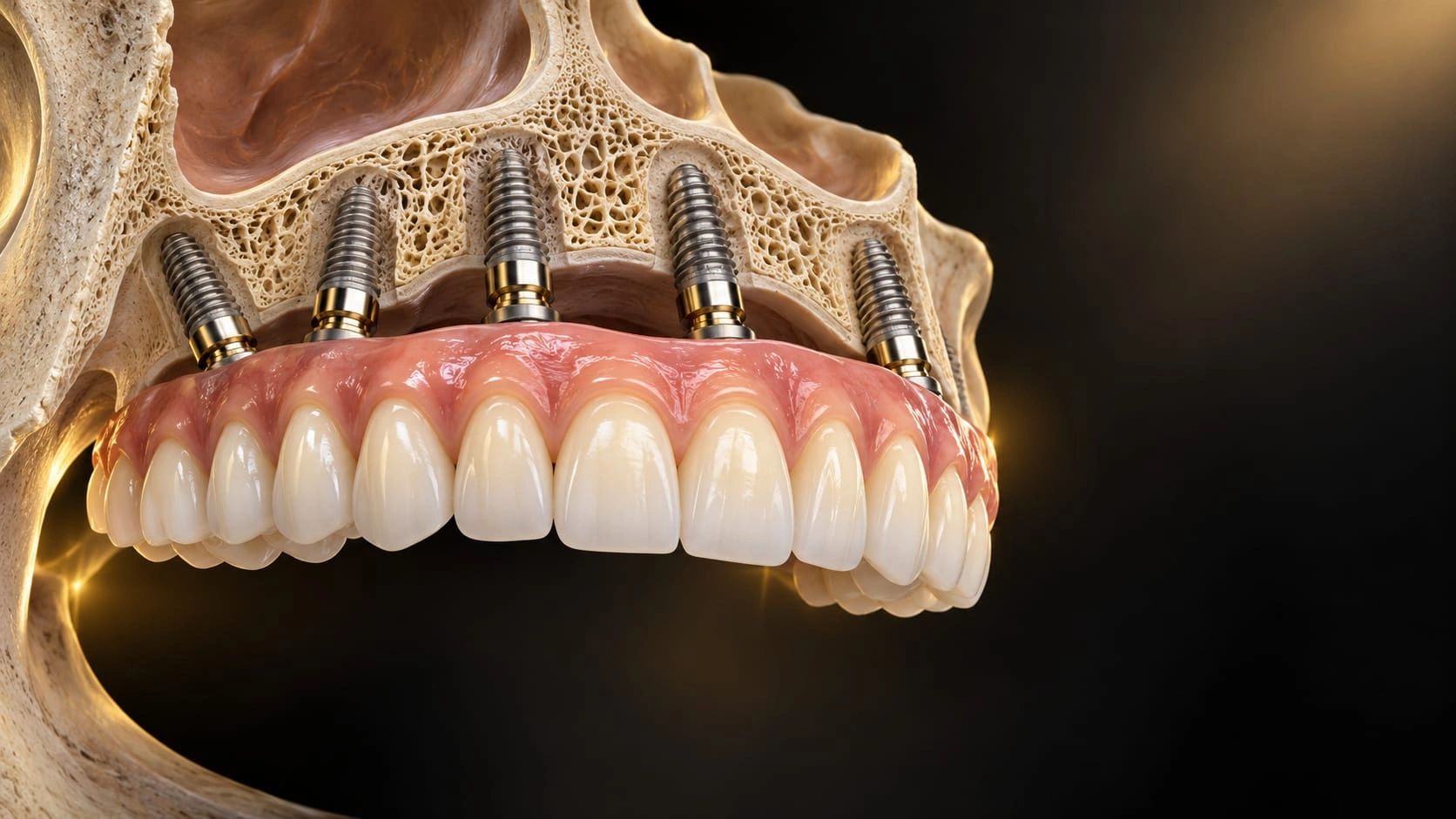


Why Might a Dentist Choose All-on-4?

In selected patients, four well-positioned implants can support a fixed bridge for one jaw. The dentist may consider this plan when the available bone and the planned position of the back implants allow suitable support for the bridge. The decision depends on 3D imaging, oral health, bite and the final prosthetic design—not on implant count alone.

The final bridge may be built on a custom titanium framework, sometimes called a titanium bar, if the treating dentist and dental laboratory choose that design. The bar helps support the replacement teeth, but it is not a required component of every All-on-4 treatment. Your treatment plan should specify the bridge materials before you proceed.
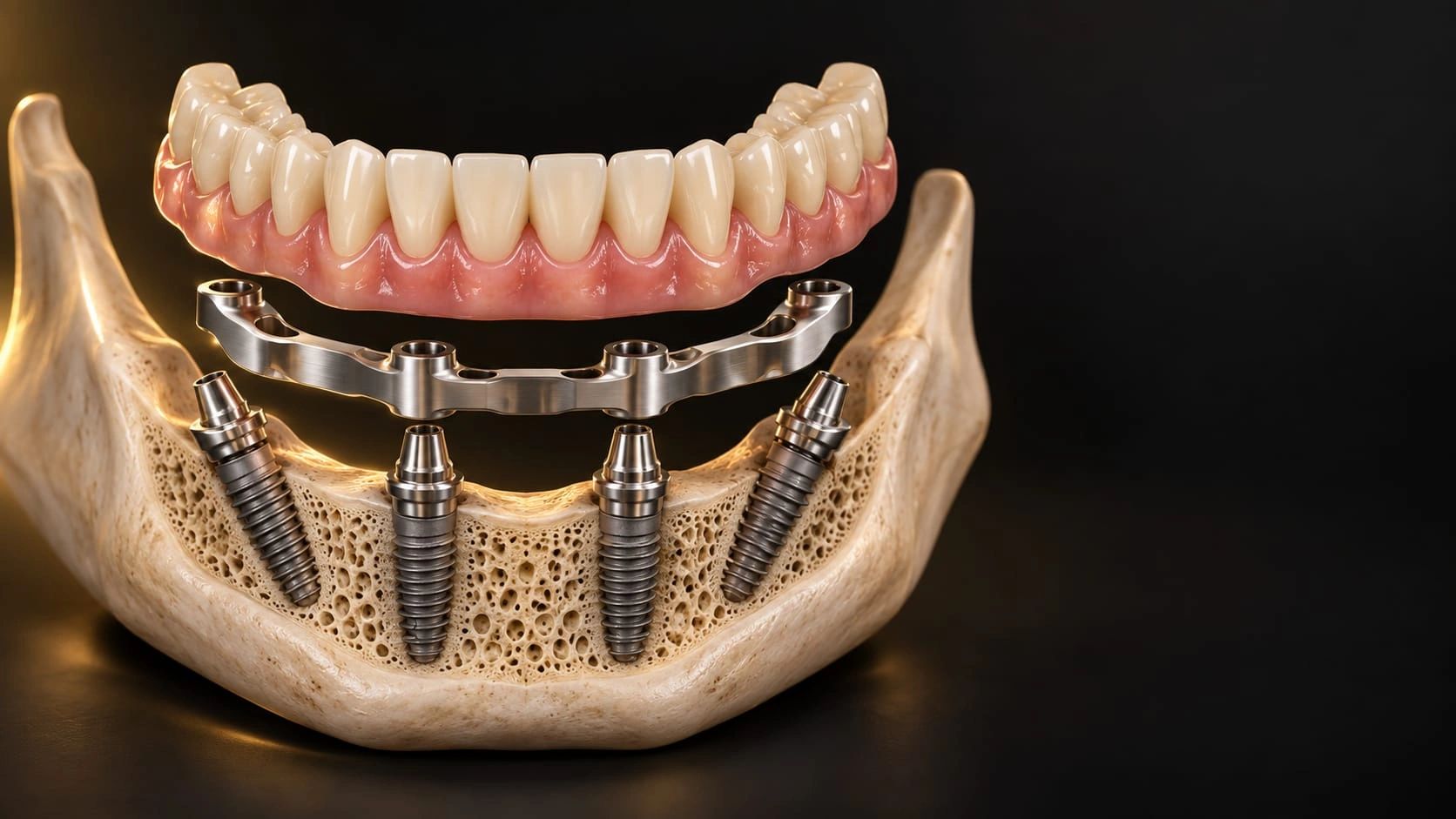


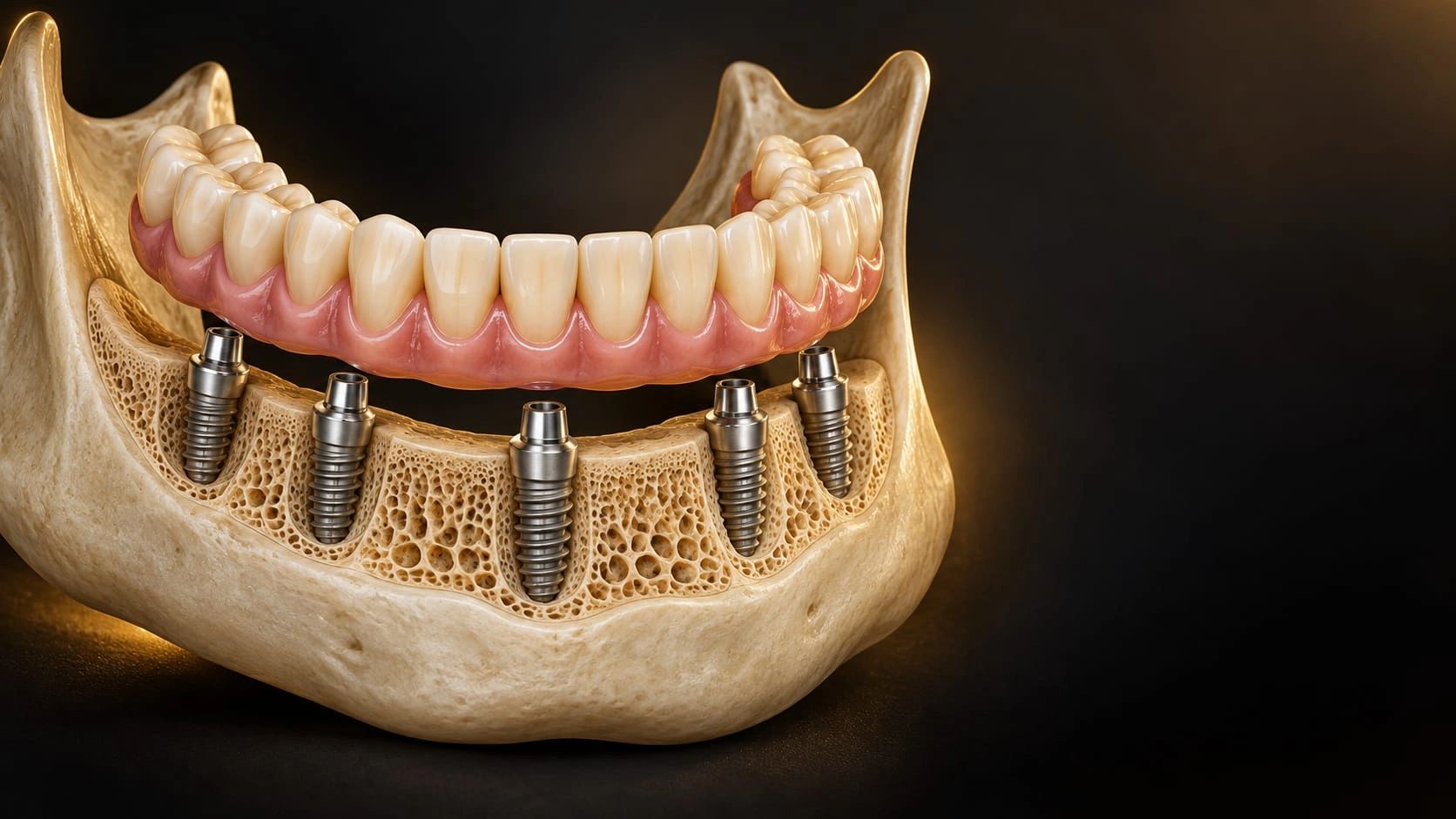
When Might Five Implants Be Used?

A full-arch bridge may be supported by five implants when the available bone, implant positions and bridge design make this arrangement appropriate. “All-on-5” describes the number of implants, not one standardized surgical technique. A fifth implant should have a clear purpose in the treatment plan; it does not automatically make the bridge stronger or longer-lasting than a well-planned four-implant option. The treating dentist decides after examining the scans and assessing the bite.


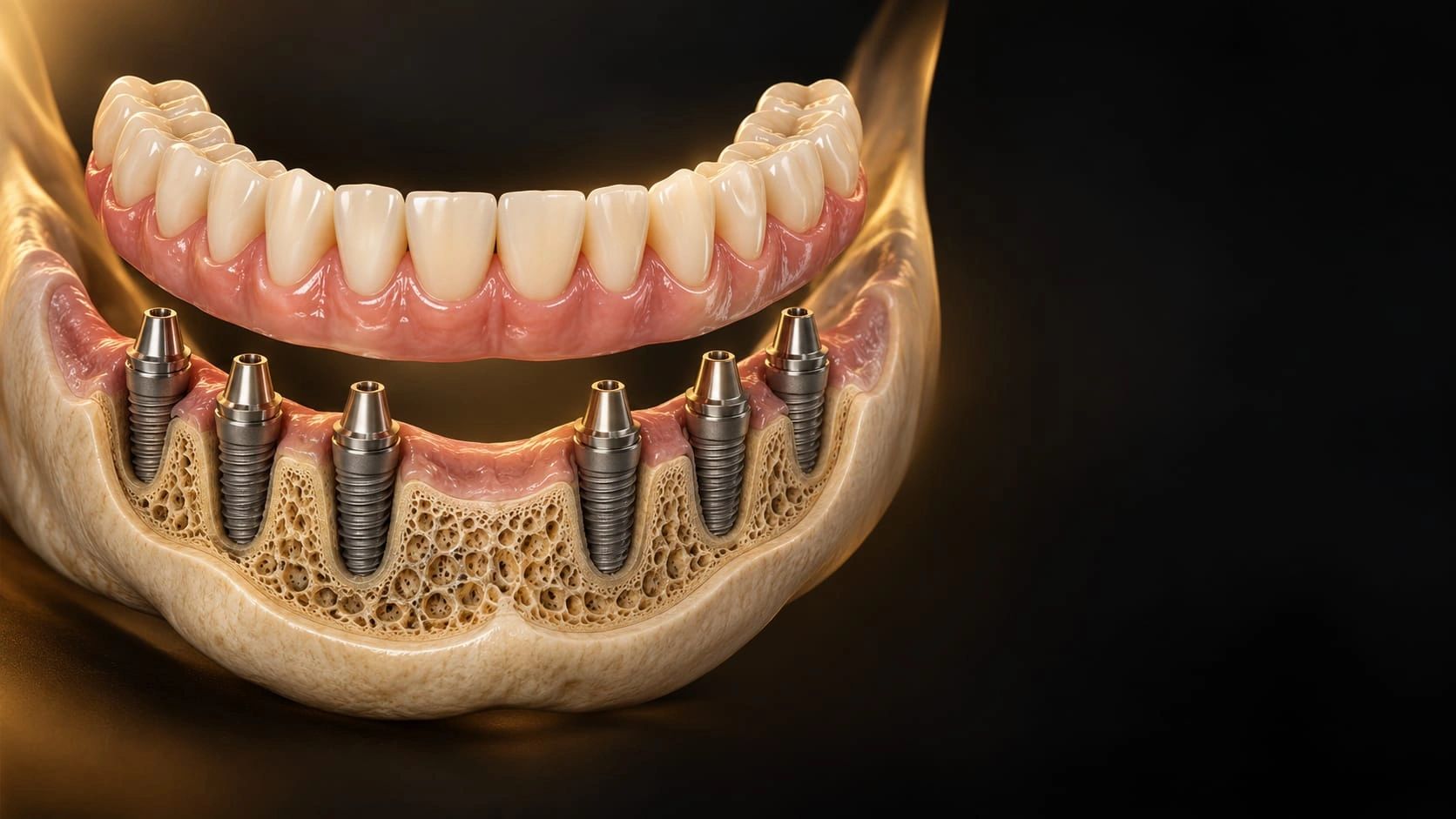
When Might Six Implants Be Used?

A full-arch bridge may be supported by six implants when the jawbone and planned restoration allow suitable placement. The additional support points can give the dental team more options for distributing the implants and designing the bridge. However, six implants are not automatically necessary or better for every patient. Their positions, the condition of the bone and the final bridge design matter more than the number alone.


How Is the Number of Implants Chosen?

The dental team plans the final bridge and reviews the available bone before deciding where implants can be placed. They also consider the spread of support across the jaw, your bite, how the bridge can be cleaned and what would happen if an implant developed a problem later. Your general health and any need for bone grafting also affect the plan. Four, five or six implants may each be appropriate in different cases; the number alone does not determine the result.

Four, Five or Six: What Is the Difference?

Four implants

Four implants

Four implants

A fixed full-arch bridge may be supported by four implants in a suitable jaw. Their positions and the span of the bridge need careful planning.

Five implants

Four implants

Four implants

A fifth implant may be included when it serves a specific purpose in the patient’s bone and bridge plan. “All-on-5” is not one standard surgical design.

Six implants

Six implants

Six implants

Six implants may provide additional support points when suitable sites are available, but they are not automatically needed or better.

Six implants

Six implants

The number of implants does not, by itself, guarantee immediate teeth, avoid bone grafting or predict how long the bridge will last.

Can Temporary Teeth Be Fitted Immediately?

In some cases, a temporary fixed bridge can be attached soon after implant surgery. The decision is made after the implants are placed and their stability is checked. Bone quality, implant positions, any grafting and the planned bridge also matter. If immediate fitting is not suitable, the dental team will explain a delayed approach or another temporary option. “Teeth in a day” cannot be promised before surgery.

What Happens During Treatment?

The dental team first examines your mouth and scans, and discusses whether any remaining teeth can be saved. They explain the proposed bridge and whether extractions or bone procedures may be needed. The implants are then placed at the planned sites. Depending on their stability and other clinical findings, a temporary bridge may be fitted or the implants may be left to heal first. After follow-up checks, the final bridge is made, fitted and adjusted. Your treating team will give you a personal treatment schedule and aftercare instructions.

Risks and Long-Term Care

Possible problems include an implant failing to integrate with bone, infection or inflammation around an implant, and complications involving the bridge or its screws, such as loosening or fracture. A fixed bridge still needs daily cleaning around and underneath it, plus regular dental examinations. Bleeding, redness, swelling or tenderness around an implant should be checked by a dental professional. Even when treatment goes well, the bridge may need maintenance or repair over time.

What Other Options Should Be Discussed?

A full-arch implant bridge is not the only option. Depending on your examination, the dentist may discuss preserving treatable natural teeth, a removable denture, an implant-retained removable denture, or a different fixed implant plan. Significant bone loss in the upper jaw may require assessment for grafting or other specialist options, including zygomatic implants. The choice should consider surgery, cleaning, future maintenance, time and cost alongside your clinical needs.

Frequently Asked Questions

Please reach us at Info@beautypointtr.com if you cannot find an answer to your question.

No. The best number depends on the available bone, implant positions, bite and bridge design. A well-planned four-implant bridge may be appropriate for one patient, while another may benefit from more support points. The treating dentist must assess each jaw individually.


No. “All-on-5” describes a full-arch bridge supported by five implants. It does not identify a particular implant brand or one standard surgical design. The treating dental team must specify the implant positions and bridge design for each patient.


Not necessarily. A temporary fixed bridge may be possible if the implants have adequate stability after placement and the clinical plan allows it. Otherwise, the dentist will discuss another temporary option while the implants heal. The final bridge is fitted at a separate stage.


Yes, treatment may be considered for both jaws, but each jaw needs its own assessment and plan. The available bone, remaining teeth and bridge design may differ between the upper and lower jaws. Your dental team will explain the proposed treatment and cost for each jaw separately.


The treating team will examine the implant, surrounding bone and bridge before deciding what to do. Treatment may involve changing or repairing the bridge, replacing an implant where possible, or making a new plan. Having more implants does not eliminate the effects of implant loss.


Plan Your Dental Assessment

Beauty Point TR coordinates consultations for international patients in Turkey. Diagnosis, implant surgery, bridge design and medical aftercare are provided by the treating dental professionals at licensed partner facilities. Share your dental history and any available scans so the team can assess which teeth may be preserved and whether a four-, five- or six-implant plan—or another option—may suit you

Request an Assessment
  • About Us
  • Privacy Policy
  • Terms & Conditions
  • Dental - Implants

Beauty Point TR

Zafer, Babaocağı Sk., Bahçelievler/İstanbul, Türkiye

+905456391099

Copyright © 2026 Beauty Point TR - All Rights Reserved.

Powered by

This website uses cookies.

We use cookies to analyze website traffic and optimize your website experience. By accepting our use of cookies, your data will be aggregated with all other user data.

DeclineAccept