Premium” and “VIP Packages” convey quality and full-service experience.

360 Liposuction Recovery and Aftercare Guide
Safe Healing. Defined Contours. Personalized Medical Support.
360 liposuction treats multiple areas around the torso, which may include the abdomen, waist, flanks, and back. Because several regions heal at the same time, swelling, bruising, tightness, and temporary changes in body shape are expected during recovery.
Liposuction removes localized fat and improves body contour. It does not repair separated abdominal muscles or remove significant excess skin in the same way as a tummy tuck.
Recovery
Recovery occurs gradually. Early swelling can temporarily hide the new contours, and the final result should not be judged during the first weeks.
Support
Follow your surgeon’s personalized instructions regarding medication, compression garments, incision care, walking, showering, travel, and return to normal activities.
Care
Good hydration, balanced nutrition, gentle movement, appropriate compression, and scheduled follow-up appointments support safe healing.
What to Expect After Surgery

What to Expect After Surgery: During the initial weeks of your 360 liposuction aftercare, your body will gradually recover and adapt to its new contours. It's normal to experience certain symptoms, which are part of the healing process. Remember to wear your compression garment after liposuction as directed to support your recovery, and follow these liposuction recovery tips to ensure a smooth healing experience.
💉 Mild to Moderate Pain
Soreness, tenderness, and a bruised sensation are expected during the first several days. Discomfort may affect the abdomen, waist, flanks, and back.
Take prescribed pain medication exactly as instructed. Contact your medical team if pain becomes severe, suddenly increases, or is not controlled by the prescribed treatment.
💧 Swelling
Swelling is normal and may affect the entire midsection. It can fluctuate during the day and may temporarily make some areas appear uneven.
Most swelling gradually improves, but mild residual swelling may continue for several months.
🟣 Bruising
Bruising commonly develops around treated areas and cannula entry points. It normally fades progressively during the first few weeks.
⚡ Temporary Numbness
Temporary numbness, tingling, increased sensitivity, or altered sensation may occur. Sensation usually improves gradually as the tissues and small nerves recover.
👕 Compression Garment
Your surgeon may prescribe a compression garment to support the treated areas and help manage swelling.
Wear the correct garment for the recommended duration. It should provide even support without causing severe pain, increasing numbness, deep creases, breathing difficulty, or skin discoloration.
🚶 Early Walking
Short, gentle walks are normally encouraged when medically safe. Walking supports circulation and reduces prolonged immobility.
Early walking does not mean strenuous exercise. Rest when tired and gradually increase movement according to your medical team’s instructions.
360 Liposuction Recovery Timeline
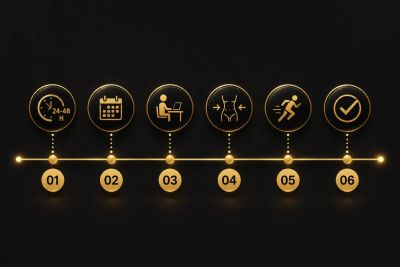
This timeline provides general guidance. Recovery varies according to the number of areas treated, the amount of fat removed, the technique used, associated procedures, and individual health.
First 24–48 Hours
Rest under appropriate supervision and take all prescribed medications as directed.
Swelling, soreness, bruising, tightness, and mild blood-stained fluid drainage from small incision sites may occur. Wear your compression garment and care for dressings exactly as instructed.
Take short, gentle walks when medically safe. Avoid remaining completely immobile for long periods.
Days 3–7
Swelling and bruising may remain noticeable. Movement normally becomes easier, but fatigue and tenderness are still expected.
Continue wearing the compression garment, caring for incisions, staying hydrated, and walking gently. Avoid heavy lifting, strenuous exercise, smoking, nicotine, and alcohol.
Week 2
Many patients feel more comfortable performing light daily activities, depending on the extent of treatment and healing progress.
Swelling, firmness, numbness, and temporary unevenness may still be present. Return to work depends on your job and must be discussed with your medical team.
Weeks 3–4
Bruising normally continues to fade, and the body contour gradually becomes clearer. Some swelling, firmness, or temporary asymmetry may remain.
Physical activity should only be increased gradually and after receiving medical approval.
Weeks 6–8
Most visible bruising should have resolved, and swelling should continue to improve. Your surgeon may allow a gradual return to more demanding exercise if healing is progressing normally.
Do not resume intense activity based only on time; obtain medical clearance first.
3–6 Months
The treated areas continue to soften and settle as residual swelling decreases. The final contour becomes more visible over time.
Skin contraction and tissue remodeling vary between patients. Maintaining a stable weight supports long-term results.
Essential Recovery Tips
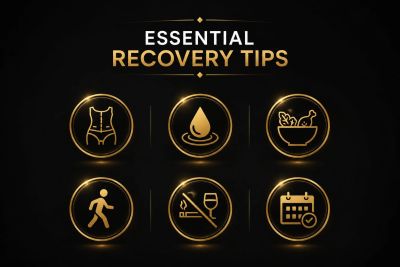
What to Expect After Surgery: During the initial weeks of your 360 liposuction aftercare, your body will gradually recover and adapt to its new contours. It's normal to experience certain symptoms, which are part of the healing process. Remember to wear your compression garment after liposuction as directed to support your recovery, and follow these liposuction recovery tips to ensure a smooth healing experience.
Wear Your Compression Garment
Wear the garment exactly as instructed. Keep it clean and dry, and make sure it lies smoothly without folding or creating excessive pressure points.
Do not add tighter garments, boards, foams, or additional compression unless your surgeon approves them.
Stay Hydrated
Drink sufficient water unless you have been given a medical fluid restriction. Good hydration supports general recovery.
Eat a Balanced, Protein-Rich Diet
Choose meals containing adequate protein, vegetables, fruit, and other nutrient-rich foods. Limit excessive salt if your medical team advises it, as salt may contribute to fluid retention.
Walk Regularly
Take short, gentle walks throughout the day as instructed. Stop and seek advice if movement causes severe pain, dizziness, shortness of breath, or rapidly increasing swelling.
Care for Your Incisions
Keep incision sites clean and dry according to your surgeon’s instructions. Do not apply creams, oils, disinfectants, or scar products before receiving medical approval.
Attend All Follow-Up Appointments
Follow-up appointments allow the medical team to examine incisions, monitor swelling, adjust garments, and identify potential complications early.
Maintain a Stable Weight
Liposuction removes fat cells from treated areas, but it does not prevent future weight gain. Significant weight changes can affect body proportions and the long-term result.
Follow Your Surgeon’s Instructions
The correct garment duration, massage plan, activity restrictions, medication, and travel advice depend on your individual procedure.
Things to Avoid During Recovery
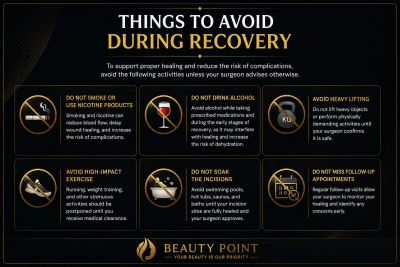
What to Expect After Surgery: During the initial weeks of your 360 liposuction aftercare, your body will gradually recover and adapt to its new contours. It's normal to experience certain symptoms, which are part of the healing process. Remember to wear your compression garment after liposuction as directed to support your recovery, and follow these liposuction recovery tips to ensure a smooth healing experience.
Smoking and Nicotine
Smoking, vaping, and nicotine products reduce blood flow, delay healing, and increase the risk of wound complications.
Alcohol
Alcohol may interact with medications, worsen dehydration, and contribute to swelling. Avoid it for the period recommended by your medical team.
Heavy Lifting
Avoid lifting children, heavy bags, weights, or other heavy objects until your surgeon confirms it is safe.
High-Impact Exercise
Running, jumping, intense cardio, abdominal training, and strenuous exercise should only be resumed after medical clearance.
Soaking the Incisions
Avoid baths, swimming pools, hot tubs, the sea, and saunas until the incisions are fully healed and your surgeon approves these activities.
Unapproved Massage
Do not massage treated areas unless the surgeon recommends it. If lymphatic massage is approved, it should be performed by an appropriately trained provider who understands your surgical plan.
Tight or Incorrect Garments
Do not use undersized garments or excessive compression in an attempt to speed recovery. Too much pressure may irritate the skin and affect comfort or circulation.
Missing Follow-Up Appointments
Do not skip medical controls because you feel well. Some concerns require examination before they become severe.
When to Contact Your Surgeon Immediately
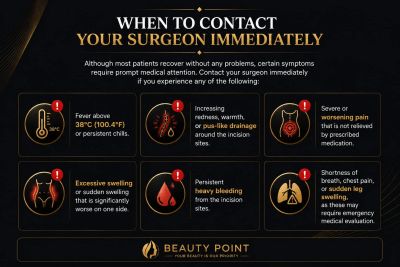
Contact your treating medical team promptly if you experience:
- Severe or rapidly worsening pain
- Sudden or one-sided swelling
- Heavy or persistent bleeding
- Fever or chills
- Spreading redness or unusual warmth
- Foul-smelling or unusual drainage
- Opening of an incision
- Increasing skin discoloration, blistering, or darkening
- A compression garment causing severe pain or numbness
- Persistent vomiting or inability to drink fluids
- New calf pain or one-sided leg swelling
- Swelling that suddenly becomes significantly worse
Seek immediate emergency medical assistance for difficulty breathing, chest pain, sudden shortness of breath, fainting, confusion, rapid heartbeat, coughing blood, or rapidly worsening symptoms.